Agriculture
Agricultural Machinery and Precision Farming Compliance
Regulatory approvals for agricultural machinery, implements, precision farming systems, and connected farm equipment: machinery safety, vehicle type approval, engine emissions, radio, and national requirements.
The category
Agricultural equipment crosses more regulatory boundaries than almost any other machine.
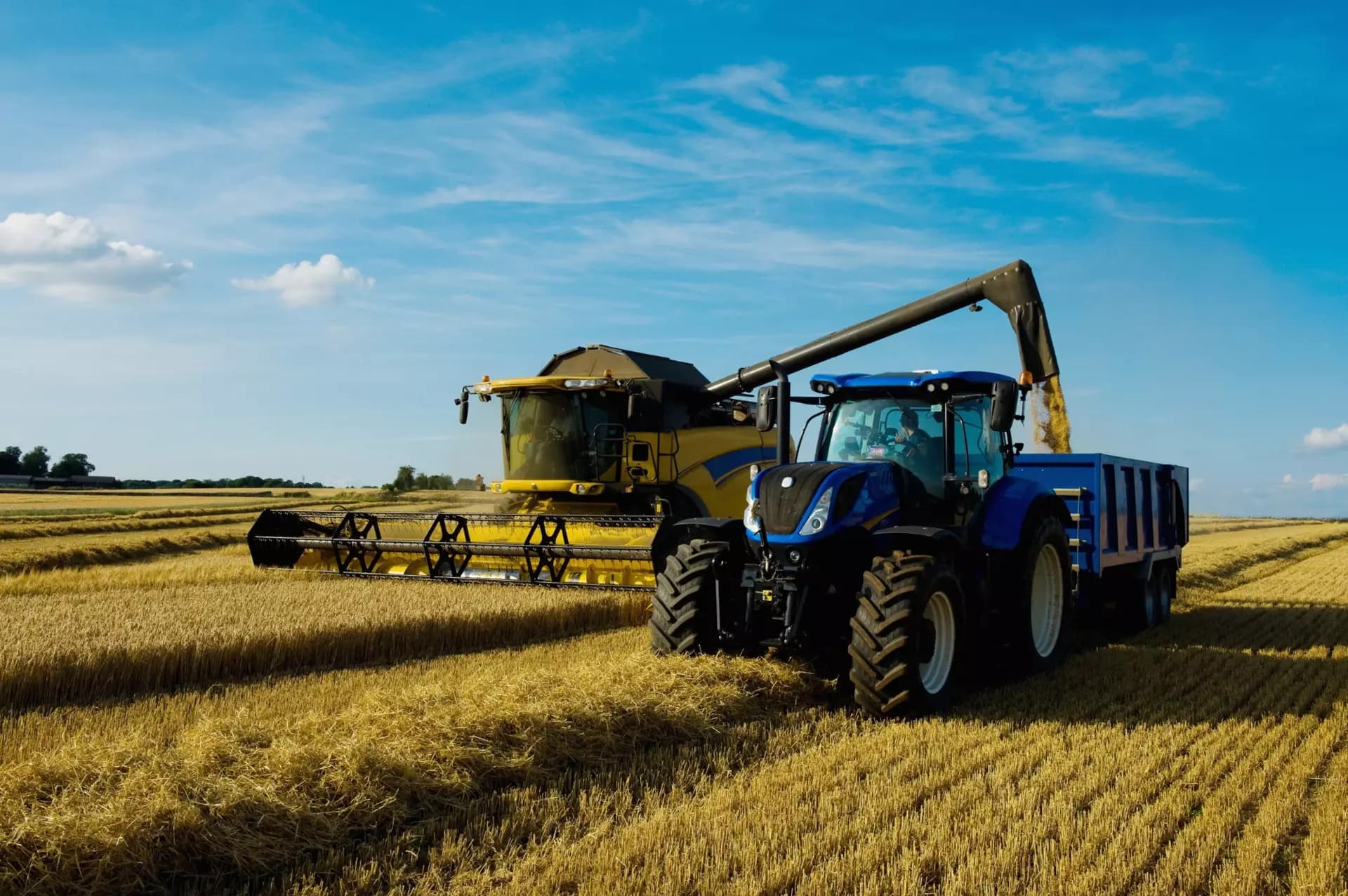
A modern tractor is a vehicle, a machine, an engine, a radio platform, and a data system. A sprayer is machinery, a pressure system, and a chemical application device with its own rules. A precision farming system is a GNSS receiver, a cellular modem, a controller, and software that increasingly makes decisions. Agricultural equipment manufacturers sell all of this into markets with different vehicle type approval frameworks, different machinery safety regimes, different engine emissions stages, and different spectrum rules, timed to planting and harvest seasons that don't move for a late certificate.
The regulatory frameworks reflect the hybrid nature of the equipment. In the EU, agricultural and forestry vehicles fall under their own type approval regulation alongside the Machinery Directive and Regulation for implements and non-road machinery. Engine emissions follow non-road mobile machinery stages in the EU and US EPA and CARB tiers in North America, with equivalents in Asia and Latin America. Implements and attachments carry machinery safety requirements. Connected features bring radio type approval and, increasingly, cybersecurity and data rules.
ORBIS Compliance works with agricultural equipment manufacturers to map that whole set for each product and market, coordinate the testing and approvals, and keep them current across equipment with long service lives and frequent updates.
Equipment and systems
Agricultural products we support
Tractors and self-propelled machines
Vehicle type approval, machinery safety, engine emissions, noise, and roadworthiness for tractors, harvesters, sprayers, and other self-propelled equipment.
Implements and attachments
Machinery safety, hydraulic and PTO requirements, and marking for towed and mounted implements sold with or separately from the tractor.
Precision farming systems
GNSS guidance, auto-steer, section control, and yield monitoring systems, with radio approval, EMC, and functional safety considerations for steering control.
Connected and autonomous equipment
Telematics, remote monitoring, and autonomous or semi-autonomous machines, where radio, cybersecurity, and evolving autonomy regulation converge.
Livestock and indoor systems
Milking, feeding, and climate systems under machinery, electrical, and in some cases animal welfare and food safety rules.
Irrigation and handling
Pumps, controllers, grain handling, and storage equipment under machinery, electrical, and hazardous location requirements for dust atmospheres.
Precision and connectivity
The electronics on the machine now carry as much regulation as the machine.
Precision farming has turned agricultural equipment into a connected product category. GNSS receivers, RTK correction radios, cellular telematics modules, Wi-Fi and Bluetooth for operator devices, and ISOBUS communication between tractor and implement each bring regulatory requirements in every market. The radio approvals alone can outnumber the machinery approvals, and they change as bands open, modules are updated, and markets adopt new rules.
Autonomy adds functional safety. When a system steers, controls implement sections, or operates without an operator, the control system's safety functions need evaluation to standards such as ISO 25119 for agricultural control systems, and the regulatory expectation for autonomous field machines is forming market by market.
ORBIS scopes the radio approvals, EMC, and functional safety alongside the machinery and vehicle requirements, and tracks the fast-moving regulation around connectivity and autonomy through law impact analysis. When a market's position on an autonomous feature is unclear, we ask the regulator.
The calendar
Planting season doesn't wait for a certificate.
Agricultural equipment sells in narrow windows. A type approval that lands a month late costs a year. ORBIS builds approval plans around the selling season, with realistic per-market lead times and the samples, documents, and local steps sequenced to hit them.
Questions
Agricultural equipment compliance
Is a tractor regulated as a vehicle or a machine?
+
Both, depending on the market. In the EU it's a vehicle under agricultural type approval, with implements and non-road machinery under the Machinery framework. In other markets the split differs. The engine is regulated separately for emissions almost everywhere. ORBIS maps which framework applies to each part of the product in each market.
How do engine emissions stages affect our export markets?
+
Significantly. Emissions stages and tiers differ by market and phase in on published schedules, and an engine compliant in one market may not be sellable in another. Transition provisions and flexibility schemes add complexity. We track the emissions requirements per market and their effect on your equipment configurations.
Our equipment uses RTK correction over a licensed radio band. What does that require?
+
Licensed-band radios often need both equipment approval and operator licensing, and the available bands and power limits differ by country. Some markets have moved corrections to cellular. ORBIS confirms the equipment approval route and the licensing implications per market before you commit to a radio design.
Equipment that's ready for the field in every country you sell into.
Bring the machine or system, its connectivity, its power source, and the markets. We'll map the machinery, vehicle, emissions, and radio approvals as one program tied to your selling season.
Book a Discussion