Sound and Environmental Testing
Acoustic and Environmental Testing for Product Compliance
Noise emission, acoustic performance, ingress protection, climatic, vibration, and shock testing for products that must meet declared conditions and regulatory limits in every market they enter.
The scope
Regulators limit what a product emits. Buyers rely on what it claims to withstand.
Sound and environmental testing sit at the edge of most compliance programs, which is exactly where they get missed. Noise emission limits are legal requirements for outdoor equipment, appliances, machinery, and vehicles in many markets. Ingress protection, temperature, humidity, vibration, and shock ratings are often declared by the manufacturer, but once declared they're subject to market surveillance, contractual acceptance, and product liability. A product marked IP67 that fails at IP65 is a non-compliant product, even if no regulator asked for the test.
The standards are well established. ISO 3744 and ISO 3746 for sound power, ISO 11201 for emission sound pressure, IEC 60529 for IP ratings, the IEC 60068 series for climatic and mechanical tests, and the product-family standards that call them up with specific severities. What varies is which of them a given market makes mandatory, what limits apply, and how results must be declared on the product and in its documentation.
ORBIS Compliance scopes sound and environmental testing within Product Compliance Testing and Management, so the evidence lines up with the safety, EMC, and certification files for the same product and is accepted by the markets you're entering.
Test areas
What we scope and coordinate
Noise emission
Sound power and sound pressure measurements for outdoor equipment, household appliances, machinery, and HVAC products, against the limits and labeling rules of the EU Outdoor Noise Directive, appliance energy labels, and national schemes.
Acoustic performance
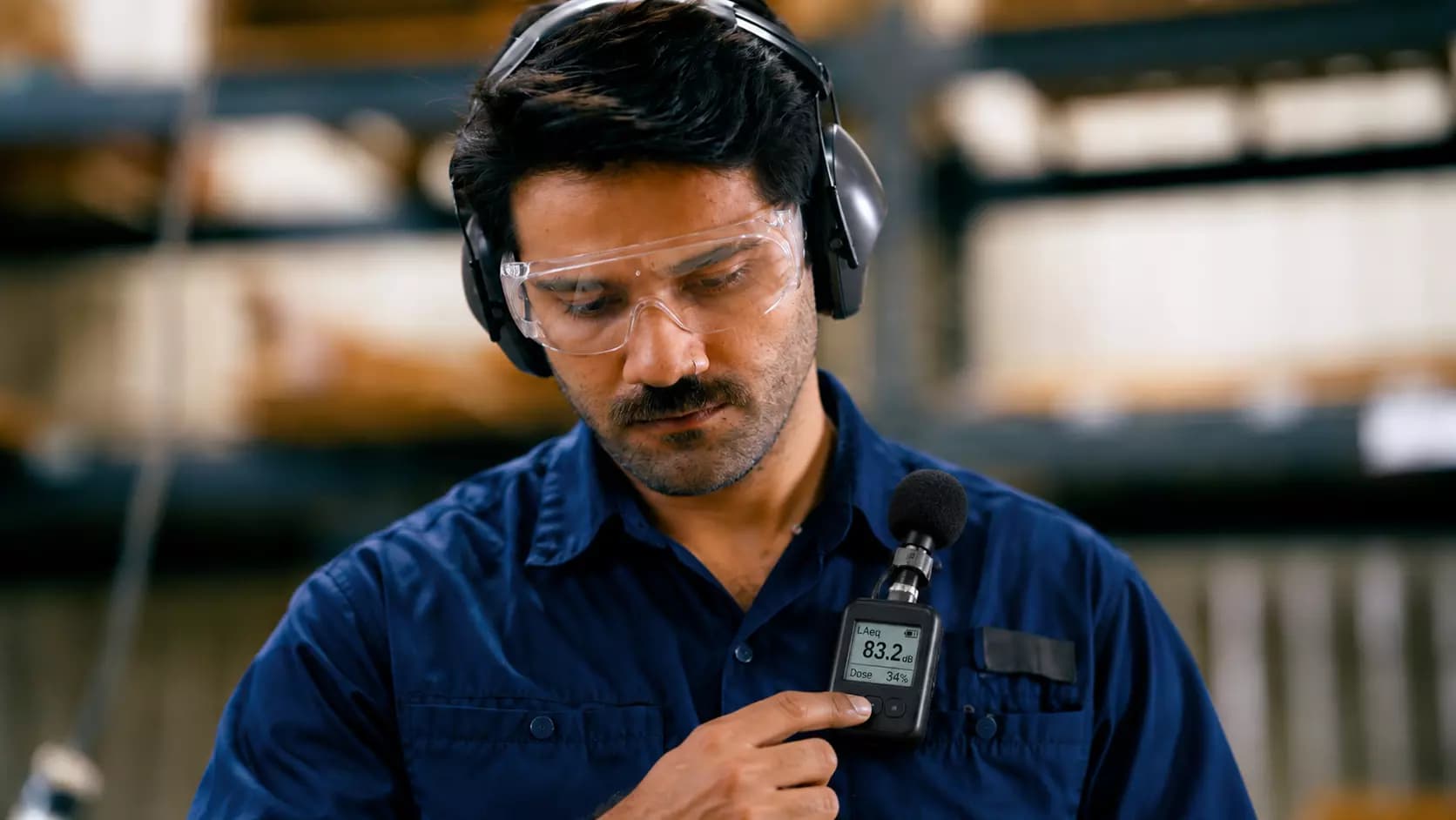
Frequency response, output, and hearing-safety measurements for audio products, headsets, and hearing-related devices under the standards that govern maximum sound output and exposure.
Ingress protection
Dust and water ingress testing to IEC 60529 for declared IP ratings, and IK impact ratings to IEC 62262 for enclosures in exposed locations.
Climatic testing
High and low temperature, humidity, thermal cycling, and salt mist under IEC 60068-2 methods, at the severities the product standard or the declared operating range requires.
Vibration and shock
Sinusoidal and random vibration, mechanical shock, drop, and transport simulation for equipment that will be shipped, installed on vehicles, or operated near machinery.
Combined and sector requirements
Environmental sequences called up by machinery, railway, marine, automotive, and telecom standards, where the order and severity of tests are defined by the application.
A common failure
The marketing rating and the test report describe two different products.
An IP rating chosen for the datasheet, an operating range copied from a competitor, or a noise figure from a prototype becomes a compliance claim the moment it's printed. ORBIS reconciles what the product claims with what the evidence shows before either reaches the market.
How ORBIS is involved
Scoped from the product's real use, tested where the markets will accept it.
Our engineers start with the product's declared conditions and its target markets. We identify which acoustic and environmental tests are legally required, which are needed to support a claim on the label or datasheet, and which are being requested by a customer or a certification body. Each gets a scope, a severity, and a standard, and the tests are sequenced with the rest of the compliance program so shared samples and laboratory visits do double duty.
Outdoor and industrial products often sit under machinery, construction, or agricultural regulations that combine noise limits with safety requirements and CE or national marking. We keep those files together, so the noise declaration, the safety report, and the type approval describe one configuration.
As with every ORBIS testing service, reports are reviewed by our engineers before they go anywhere, stored alongside the rest of the product record in ORBIS Intelligent Compliance, and available to your team and authorized providers in one place.
Questions
Sound and environmental testing
Is noise testing legally required, or only for labeling?
+
Both, depending on the product and market. The EU Outdoor Noise Directive sets mandatory limits and marking for listed equipment. Appliance energy labels in several markets require declared noise values. Machinery regulations require noise emission to be declared in the instructions. We tell you which applies to your product in each market.
We already declare an IP rating. Do we need to test it?
+
If you declare it, you need to be able to substantiate it. Market surveillance authorities and customers can ask for the evidence, and a failed claim is a non-compliance. Testing to IEC 60529 at the declared rating is the straightforward way to hold the claim.
Can environmental tests damage samples needed for other testing?
+
Some can, which is why sequencing matters. We plan sample allocation across safety, EMC, radio, and environmental tests so destructive or stressful tests run on the right units at the right time, and the number of samples you build is kept realistic.
Prove the product survives where it will be used.
Bring the product, its declared ratings, and the environments it's sold into. We'll scope the acoustic and environmental evidence each market and each claim actually requires.
Book a Discussion