
Beauty & Personal Care
Beauty and Personal Care Product Compliance
Cosmetic regulation, ingredient restrictions, safety assessment, notification and sanitary registration, labeling, and claims review for skincare, haircare, color cosmetics, fragrance, and personal care devices worldwide.
The category
Cosmetics are regulated for what's in them, what they claim, and who takes responsibility for them in each market.
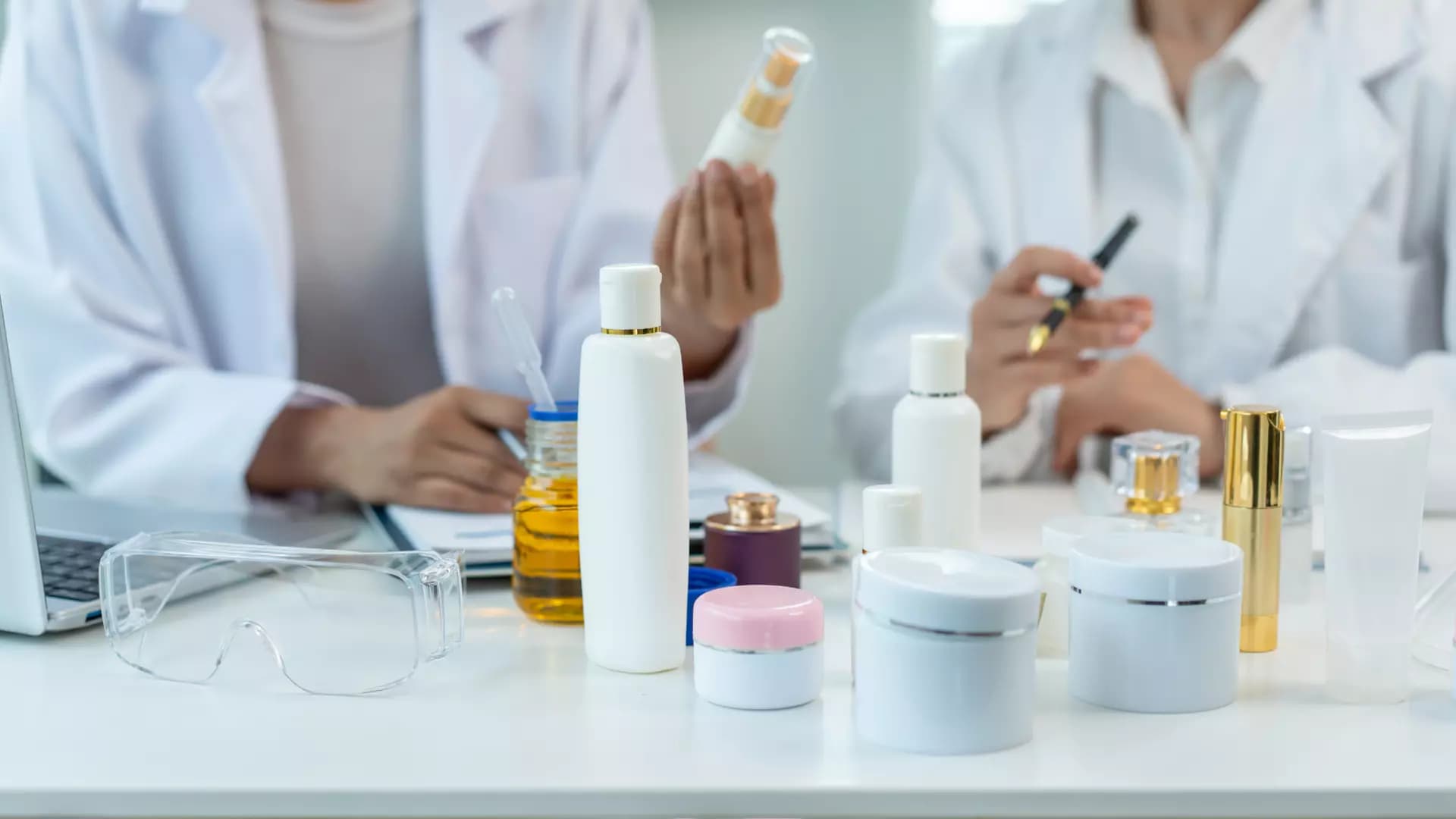
Skincare, haircare, color cosmetics, fragrance, oral care, sun care, and personal care products live under cosmetic regulation in most markets, with a consistent logic and very different implementations. The regulation controls ingredients: prohibited and restricted substances, colorants, preservatives, and UV filters, with lists that differ by country and change often. It requires a safety assessment and a product information file. It requires notification or registration with the authority, often through a locally established responsible person or registration holder. It governs labeling, from ingredient nomenclature to warnings and durability. And it polices claims, with the line between a cosmetic and a drug or medical device drawn differently in each jurisdiction.
Personal care devices add another regime. Hair dryers, electric toothbrushes, shavers, skin devices, and beauty tools are electrical products, sometimes with batteries and radios, and some skin and light-based devices cross into medical device regulation depending on their claims and markets.
ORBIS Compliance works with beauty and personal care brands and manufacturers on cosmetic registration and notification, responsible person and local holder representation, ingredient and labeling compliance, claims review, and the electrical, battery, and radio approvals for devices.
What we manage
The beauty and personal care regulatory set
Ingredient compliance
Formulations reviewed against each market's prohibited and restricted lists, colorant and preservative annexes, and concentration limits, with monitoring for changes.
Safety assessment and product file
Cosmetic product safety reports and product information files to EU, UK, ASEAN, and other frameworks, maintained as formulations and rules change.
Notification and registration
CPNP and UK notifications, sanitary registrations in Latin America, and national registrations across Asia and the Middle East, filed under the required local person or holder.
Labeling and claims
INCI ingredient lists, warnings, period-after-opening, origin, and language requirements, plus claims reviewed against cosmetic versus drug or device boundaries per market.
Personal care devices
Electrical safety, EMC, battery, and radio approvals for devices, with medical device classification review for skin, light, and therapeutic products.
Packaging and environment
Packaging material rules, recycling labeling, and producer responsibility, plus the microplastics and substance rules increasingly applied to formulations and packaging.
The responsible person
Someone local has to answer for the product. Choose that someone deliberately.
Most cosmetic frameworks require a legally responsible party established in the market: the responsible person in the EU and UK, the registration holder for sanitary registrations across Latin America, the notifier or importer in various Asian markets. That party holds the product file, receives authority correspondence, and carries legal responsibility for the product's compliance. When it's the distributor, the brand's market access is tied to that relationship, and the product file may not even be in the brand's hands.
An independent responsible person or registration holder keeps the file and the market access under the brand's control. Distributors sell; the holder holds. Changing distribution doesn't mean re-registering the range.
ORBIS provides responsible person and local holder representation for cosmetic products, integrated with the sanitary registration and notification work, so the file, the registration, and the holder are one coordinated arrangement per market.
Devices
When the beauty product plugs in, the electronics rules arrive too.
Personal care devices are electrical products, and the full electronics set applies: safety to IEC 60335 or IEC 62368-1 depending on the device, EMC, battery certification and transport for rechargeable devices, radio approval for connected devices, RoHS and substance compliance, and WEEE and battery producer registration. Devices using light, heat, current, or ultrasound on the skin may be classified as medical devices in some markets depending on their claims.
ORBIS scopes the device file alongside the cosmetic file, and confirms medical device classification per market before the launch claims are set.
Questions
Beauty and personal care compliance
Our product is compliant in the EU. Can we sell it in Latin America and Asia?
+
The EU file is a strong foundation, but most markets require their own notification or registration, often with a local holder, and several have ingredient restrictions or labeling rules that differ. Some accept EU compliance as the basis for an abbreviated process. ORBIS maps the route per market for your range.
How do we know if a claim makes our product a drug or a device?
+
The boundary depends on the claim, the mechanism, and the jurisdiction. Anti-aging is cosmetic almost everywhere; treating a skin condition is usually not. Sun protection is cosmetic in some markets and an OTC drug in others. ORBIS reviews claims against each target market's boundary before launch, and engages the authority where a claim sits close to the line.
How often do cosmetic ingredient rules change?
+
Frequently. Restricted substance annexes are updated several times a year in major frameworks, with transition periods for reformulation. Monitoring those changes against your formulations, and knowing the deadlines, is part of what ORBIS Intelligent Compliance and our ongoing compliance service provide.
Launch the range in every market with the file to support every claim.
Bring the formulations, the claims, the packaging, and the markets. We'll map the registration, ingredient, labeling, and device requirements each one carries, and the responsible person or holder it needs.
Book a Discussion