
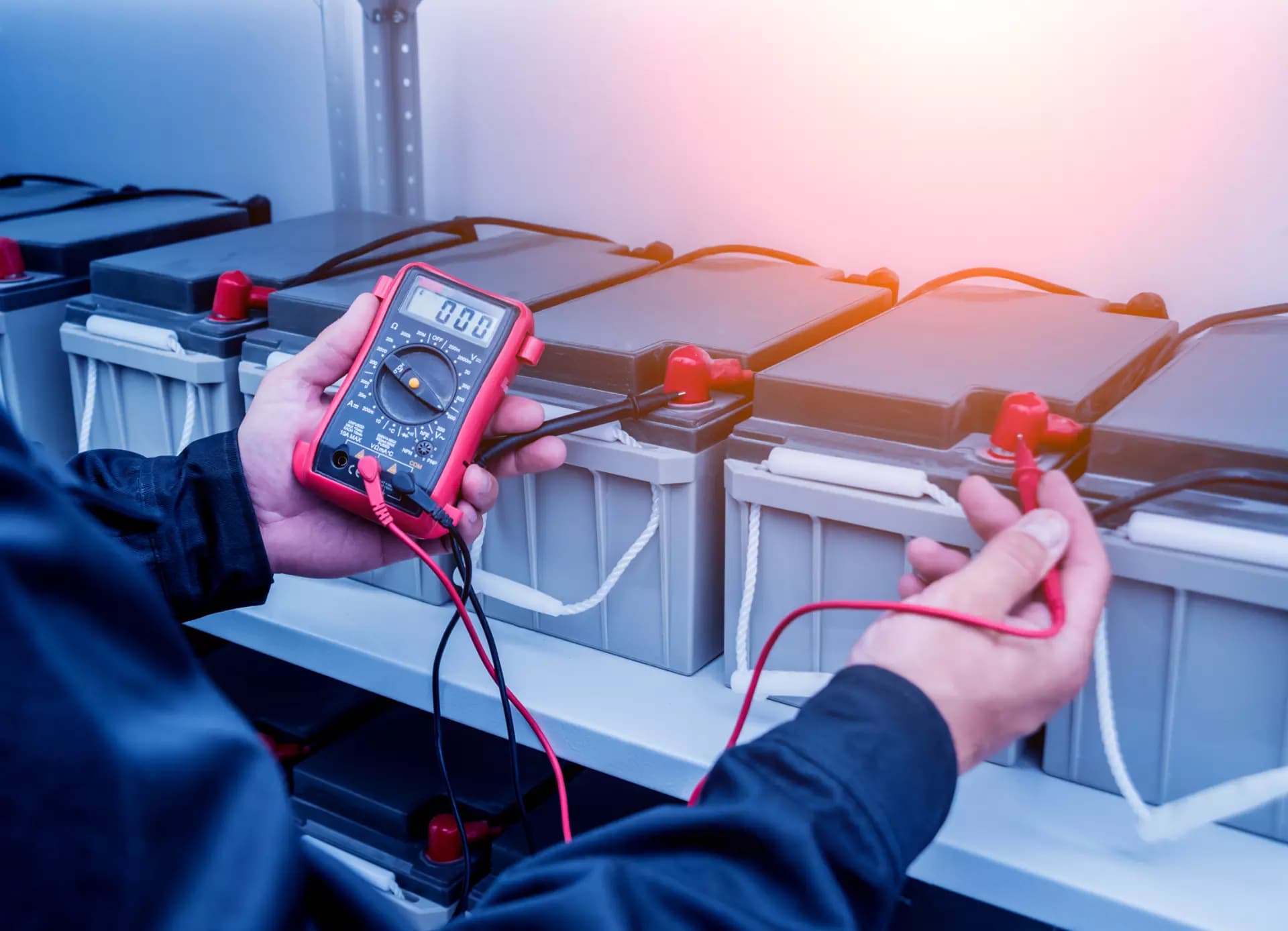
Batteries & Energy Storage
Battery and Energy Storage Compliance
Safety certification, UN 38.3 transport, grid connection, and producer obligations for cells, packs, stationary storage, and battery-powered products, including the phased requirements of the EU Battery Regulation.
The category
No product category is gaining regulation faster than batteries.
The regulatory picture
Safety, transport, application, and producer rules, each expanding at once.
Batteries and energy storage products carry four regulatory dimensions. Safety: cells and packs are certified to IEC 62133 for portable applications, IEC 62619 and IEC 63056 for industrial and stationary storage, UL 1973 and UL 9540 for stationary systems in North America, and application-specific standards for vehicles and other uses. Transport: UN 38.3 testing and dangerous goods documentation are required before lithium batteries can move by any mode. Application: the product the battery serves brings its own rules, from consumer electronics safety to grid connection requirements for stationary storage. And producer responsibility: registration, collection financing, labeling, and reporting in every market of sale, now expanding sharply under the EU Battery Regulation with due diligence, carbon footprint, recycled content, removability, and battery passport requirements phasing in over several years.
The regulatory expansion is driven by real events. Battery fires in e-mobility and storage have brought new mandatory certification in several jurisdictions. Supply chain concerns have brought due diligence rules. Climate policy has brought carbon footprint and recycled content requirements. Each arrives on its own schedule in each market, and the manufacturer of a battery or a battery-powered product has to track all of them.
ORBIS Compliance works with cell and pack manufacturers, energy storage system integrators, and manufacturers of battery-powered products on the full set: safety and transport certification, application approvals, and the battery producer program across markets, with monitoring of the requirements arriving next.
Product types
Battery and storage products we support
Cells and portable packs
Lithium-ion, lithium polymer, and other chemistries for consumer electronics, tools, and portable devices under IEC 62133, UL 2054, and UN 38.3.
Industrial and light mobility batteries
Packs for e-bikes, scooters, industrial equipment, and backup power under IEC 62619, IEC 62133, UL 2271, and mobility-specific safety mandates.
Stationary energy storage
Residential and commercial battery storage under IEC 62619, IEC 63056, UL 1973, UL 9540 and 9540A, grid connection rules, and fire codes.
Battery management and power electronics
BMS, inverters, and chargers for storage systems under electrical safety, EMC, functional safety, and grid interconnection standards.
Battery-powered products
Any product with a battery inside, where the battery's certification, transport, and producer obligations run alongside the product's own approvals.
Second-life and repurposed batteries
Batteries entering a new application, with evaluation, certification, and producer questions that regulation is only beginning to address.
The EU Battery Regulation
A phased rewrite of what a battery has to be and prove.
The EU Battery Regulation replaces the old directive with a framework that touches design, supply chain, information, and end of life, phasing in over several years by battery category. Producer responsibility is reinforced with higher collection targets. Labeling gains new symbols, a QR code, and eventually the battery passport for larger batteries. Portable batteries in appliances must become removable and replaceable by the end user. Industrial, EV, and light mobility batteries gain carbon footprint declarations, recycled content minimums, and supply chain due diligence requirements. Performance and durability requirements follow.
Each requirement has its own date and its own category scope. A manufacturer needs to know which of their batteries are in which category, which requirements apply from when, and what design, documentation, and supply chain work each demands. Getting ahead of the schedule is a design and sourcing decision, not a compliance afterthought.
ORBIS maps the regulation to your specific batteries and products through law impact analysis, runs the battery producer program in the EU and other markets, and scopes the certification and documentation each phase requires.
Stationary storage
Grid-connected storage adds the utility and the fire authority to the list of regulators.
Residential and commercial energy storage systems face electrical safety and battery certification, and then a second layer: grid interconnection requirements set by utilities and national rules, fire codes and installation standards that govern where and how systems can be installed, and in some markets registration or approval of the system with the energy regulator. The requirements differ by country and often by utility, and they change as grids adapt to distributed storage.
ORBIS scopes storage system compliance across safety certification, grid connection, and installation requirements per market, and coordinates with the certifying bodies and authorities each one involves. See also energy products.
Questions
Battery and energy storage compliance
We buy certified cells. Does our pack need its own certification?
+
Yes. Cell certification covers the cell. The pack, with its protection circuit, enclosure, and configuration, needs its own safety certification and its own UN 38.3 testing. The host product's evaluation then references the pack certificate. ORBIS scopes cell, pack, and product certification so each level's evidence serves the next.
Which markets require mandatory battery certification for e-mobility?
+
A growing number, driven by fire incidents. Several jurisdictions now require certification to specific standards for e-bike and e-scooter batteries, and others are moving in that direction. The list changes quickly. ORBIS confirms the current requirement per market before you ship.
How does the battery passport work?
+
Under the EU Battery Regulation, larger batteries will carry a digital record accessible via QR code, containing specified information about the battery's composition, performance, carbon footprint, and supply chain, maintained through its life. Implementation details and dates are being finalized. ORBIS tracks the requirements as they settle and maps them to your batteries.
Batteries certified to ship, to sell, and to stay on the market.
Bring the cell or pack, its application, and the markets. We'll map the safety, transport, grid, and producer requirements, and the EU Battery Regulation dates that apply to your category.
Book a Discussion