
Monitoring
Patient Monitoring and Wearable Medical Device Compliance
Regulatory approvals for patient monitors, wearables, and remote monitoring systems from hospital to home: medical classification, IEC 60601 and home-use standards, radio approval, and health authority registration.
The category
Monitoring has moved from the bedside to the wrist, and regulation has followed it home.
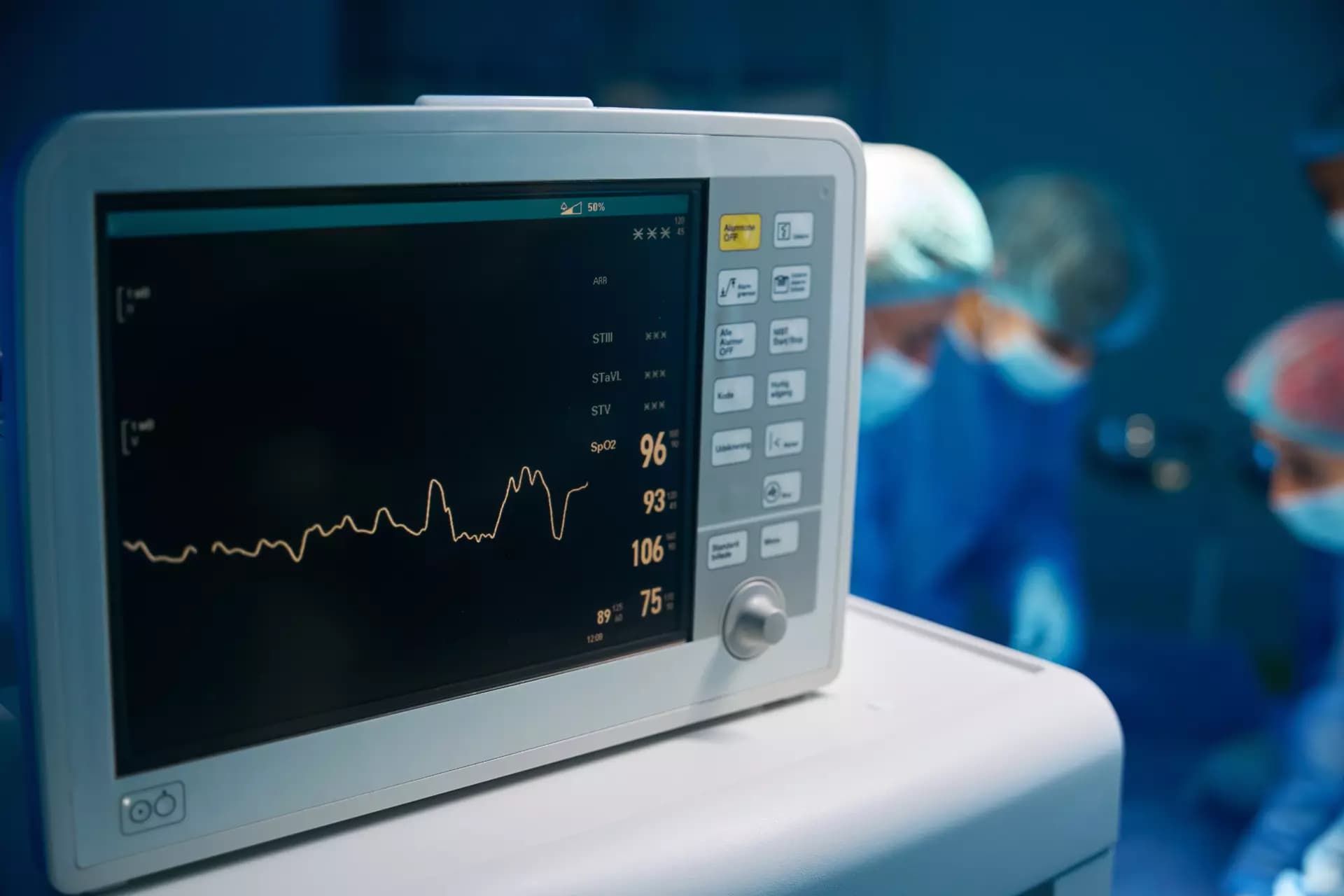
Patient monitoring spans multi-parameter bedside monitors, ambulatory ECG, pulse oximeters, continuous glucose monitors, wearable vital-sign patches, remote monitoring hubs, and consumer wearables that make health claims. The category's regulatory center of gravity has shifted with the technology. Hospital monitors are established higher-class medical devices with well-understood files. Home and wearable monitoring raises new questions: whether the product is a medical device at all, which class, what home-use and lay-user standards apply, how the radio and app are regulated, and how data flows are treated.
Classification is the first and most consequential decision. The same wearable can be a general wellness product in one market and a regulated medical device in another, depending on the claims, the measurements, and the intended use. Getting it wrong in either direction is expensive: an unnecessary registration program, or a product pulled from the market for unapproved medical claims. The answer often requires engaging the health authority directly.
ORBIS Compliance works with monitoring device manufacturers to settle classification per market, scope the medical, radio, and electrical evidence as one program, and manage health authority registration and local representation across the countries where their devices will be used.
Hospital and home
The same measurement, two regulatory environments.
Hospital monitoring
What matters
Home and wearable monitoring
Established medical device classes with clear precedent.
CLASSIFICATION
Depends on claims and intended use; wellness versus medical is decided per market.
IEC 60601-1 and particular standards for professional use environments.
STANDARDS
IEC 60601-1-11 for home use, usability for lay users, and body-worn considerations.
Hospital network integration, often wired or Wi-Fi under IT governance.
CONNECTIVITY
Bluetooth to a phone, cellular to a cloud, with radio approval and RF exposure in every market.
Trained clinicians in a controlled environment.
USERS
Patients and caregivers, with labeling, alarms, and instructions designed for them.
Device types
Monitoring products we support
Bedside and multi-parameter monitors
Hospital monitoring systems under IEC 60601-1, IEC 60601-1-8 alarms, and particular standards for each parameter, with health authority registration.
Wearable vital-sign devices
Patches, wristbands, and sensors measuring ECG, SpO2, temperature, and respiration, with body-worn RF exposure and home-use standards.
Continuous glucose and metabolic monitors
Higher-class devices with implanted or skin-contact sensors, transmitters, and apps that often carry their own classification.
Remote monitoring hubs and gateways
Home gateways collecting device data over Bluetooth and forwarding over cellular or Wi-Fi, with radio approval and sometimes medical classification.
Consumer wearables with health features
Products where specific features are regulated as medical while the product is not, requiring careful claims and feature-level registration.
Monitoring software and apps
Companion apps, dashboards, and algorithms that may be software as a medical device in their own right.
How ORBIS is involved
Classification first, then everything the class and the radio require.
ORBIS starts with the intended use, the claims, and the measurements, and confirms the classification in each target market, engaging the health authority where the position for a novel wearable isn't clear from published guidance. That decision drives the whole program: the dossier, the standards, the clinical or performance evidence, the labeling, and whether registration is needed at all.
From there, our engineers scope the medical electrical and EMC evidence including home-use and body-worn requirements, the radio approvals and RF exposure assessments for every transmitter, and the battery and substance files. Our regulatory professionals manage the sanitary registrations and local holders per market, and the cybersecurity evidence connected devices increasingly require.
Every approval sits in ORBIS Intelligent Compliance as one product record, so a firmware update or a new claim is assessed against the medical registration, the radio grant, and the cyber file together.
Questions
Monitoring device compliance
Our wearable measures heart rate and SpO2. Is it a medical device?
+
It depends on the claims and the market. Heart rate for fitness is generally wellness; SpO2 for detecting a medical condition is generally medical. Some markets draw the line differently, and the app's functions matter too. ORBIS confirms the position per market and, where it's unclear, engages the authority before you commit to a claim.
What does home use change in the medical electrical file?
+
IEC 60601-1-11 adds requirements for devices used in the home environment: supply variations, environmental conditions, mechanical robustness, and usability for lay operators. EMC expectations also reflect the home environment. These have to be built into the test program from the start.
How do we handle data and privacy requirements across markets?
+
Health data rules shape where data can be processed and stored and what consent is required, and several health authorities ask about data handling during registration. ORBIS maps the requirements relevant to your device's registration and coordinates with your privacy and legal teams on the rest.
Monitor patients wherever they are, legally in every market.
Bring the device, its measurements and claims, its radios, and the markets. We'll settle the classification, scope the medical and radio approvals, and map the registration route for each country.
Book a Discussion